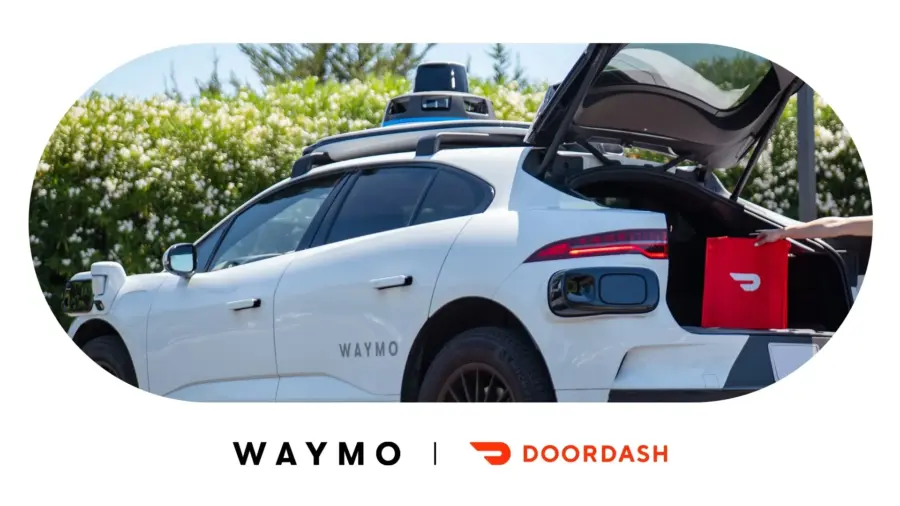
The autonomous car is no longer just a futuristic dream. Between the announcements from American giants such as Waymo, Tesla, Amazon and European regulatory advances, the question is no longer whether these vehicles will arrive in France, but when. A breakdown of the timelines, key players and levels of autonomy that will soon redefine our mobility.
American Robotaxis Land in Europe: First Step Toward France

2025 marks a historic turning point for autonomous mobility in Europe. Waymo, a Google subsidiary, officially announced in October 2025 the launch of its robotaxis in London in 2026. This first European launch paves the way for a gradual expansion to other capitals, with Paris explicitly mentioned as a future destination.
Waymo is not alone in this race. Amazon, through its subsidiary Zoox, has launched its fully autonomous robotaxi service in Las Vegas and San Francisco. These electric vehicles, with no steering wheel or pedals, can carry four passengers and run for about 16 hours on a single charge. The e-commerce giant aims to produce 10,000 robotaxis per year.
On the ride-hailing side, Uber and Lyft are also preparing their European offensive. In partnership with the Chinese company Baidu, Lyft plans to deploy Apollo Go robotaxis in Germany and the United Kingdom as early as 2026.
Switzerland, a European Pioneer with Baidu

Switzerland is emerging as the strategic gateway for robotaxis in Europe. The Chinese giant Baidu, the world’s number two in autonomous driving behind Waymo, announced in October 2025 that it would begin testing its Apollo Go robotaxis on Swiss territory as early as December 2025.
This unprecedented partnership between Baidu and CarPostal, a subsidiary of the Swiss Post, will give rise to the AmiGo service. The first trials will begin with a pilot fleet equipped with safety drivers in three cantons in the east of the country: St. Gallen, Appenzell Ausserrhoden and Appenzell Innerrhoden. Regular service is scheduled no later than the first quarter of 2027.
The vehicles used will be RT6 electric Level 4 robotaxis specially designed by Baidu, capable of carrying up to four passengers. Their distinctive feature? A removable steering wheel that can be taken out once the service switches to fully autonomous mode. Up to 25 vehicles are expected to be deployed in this initial phase.
Baidu chose Switzerland for several strategic reasons: the country’s political stability, the exceptional quality of its road infrastructure, and above all the positioning of Zurich as Europe’s center for artificial intelligence. The Chinese group also opened a European hub dedicated to autonomous mobility in Zurich in July 2025, taking advantage of its proximity to ETH Zurich and the University of Zurich to attract the best talent.
This Swiss presence could quickly benefit France, as Baidu already operates more than 800 vehicles in 16 Chinese cities and completed over 2.2 million rides in the second quarter of 2025. Its massive operational experience is a major asset for conquering Europe.
Tesla and Full Self-Driving: An Imminent but Regulated Arrival

Tesla is intensifying its efforts to obtain approval for its Full Self-Driving (FSD) system in Europe. According to the latest information, FSD could be authorized by September 2025 thanks to amendments to UNECE regulation R171, discussed in October 2025.
The American manufacturer also unveiled its Cybercab, a futuristic robotaxi with no steering wheel or pedals, at the VivaTech show in Paris in June 2025. This two-seater, promised at under $30,000, is expected to enter production between 2026 and 2027.
However, France remains vigilant. In June 2025, the DGCCRF (Directorate-General for Competition, Consumer Affairs and Fraud Control) ordered Tesla to stop its misleading commercial practices concerning “Fully Self-Driving Capability”. The system currently sold for €7,500 in France does not provide full autonomous driving, but advanced Level 2 assistance.
The Autonomy Levels: Understanding the Classification
To grasp the issues at stake, you need to understand the six levels of automation defined by the SAE (Society of Automotive Engineers):
Level 0 : No automation – the driver controls everything
Level 1 : Driver assistance (adaptive cruise control)
Level 2 : Partial automation – the car manages steering and speed simultaneously, but the driver must remain attentive
Level 3 : Conditional automation – the driver may take their attention away under certain conditions, but must be able to take back control
Level 4 : High automation – the vehicle can operate without a driver in specific areas
Level 5 : Full automation – no human intervention required, in all circumstances
Currently, France permits level 3 autonomous driving since September 1, 2022. However, the conditions are restrictive: a maximum speed of 60 km/h, on roads separated by a central median, and pedestrians and cyclists are prohibited.
Switzerland has also crossed this threshold by authorizing level 3 automated driving since March 1, 2025. Three use cases are now permitted: automated highway piloting, the use of driverless vehicles on road sections approved by the authorities, and automated parking without a driver.
Which Manufacturers Already Offer Autonomous Driving?

Mercedes-Benz remains the European pioneer with its level 3 Drive Pilot system, approved in Germany on the EQS and S-Class. The manufacturer has even raised the maximum speed of its system to 95 km/h in early 2025, allowing drivers to enjoy automated driving for longer across Germany’s entire 13,191 km motorway network.

BMW followed with its Personal Pilot L3, available on the 7 Series in Germany for €6,000. This system allows the driver to take their hands completely off the steering wheel during motorway traffic jams at speeds up to 60 km/h. However, neither manufacturer has yet applied for approval in Switzerland, even though the market is now open.
For levels 4 and 5, European manufacturers are lagging behind American and Chinese giants. Stellantis has however partnered with the Chinese company Pony.ai to develop and test level 4 autonomous cars in Europe, using the Peugeot E-Traveller as a test platform.
The French and European Regulatory Framework
France has put in place an ambitious legal framework through article 31 of the Loi d’orientation des mobilités (LOM) of December 24, 2019. Several decrees and ordinances published between 2021 and 2022 specified the conditions for using autonomous vehicles and the liability associated with them.
France’s national strategy for the development of automated and connected road mobility was revised in April 2025 for the period 2025-2027. This roadmap notably provides for the development of pilot projects and the preparation of infrastructure.
At the European level, UNECE Regulation R171, adopted in March 2025, allows automatically initiated maneuvers on motorways for Level 3 vehicles, with entry into force on September 26, 2025. In practical terms, cars will be able to change lanes or overtake automatically without human confirmation.
The European Union is also working on a unified framework that could be established by mid-2026 according to the United Nations. The European Commission has launched an initiative called “ambitious cities for autonomous driving” that is due to start at the end of 2026.
Projected Timeline for France
Based on official announcements and ongoing projects, here is a realistic timeline for the rollout of autonomous cars in France:
2025-2026 : Approval of advanced Level 3 systems (Tesla FSD, European systems) and the start of robotaxi trials in pilot zones. Switzerland will serve as a full-scale laboratory with Baidu robotaxis starting December 2025.
2026-2028 : First trials of Level 4 robotaxis in defined zones (airports, campuses, specific neighborhoods). Waymo will begin operations in London in 2026, paving the way for Paris.
2027-2030 : Gradual rollout of semi-autonomous vehicles (Levels 2 and 3) on the consumer market and expansion of robotaxi services in major cities. Baidu’s AmiGo service will be fully operational in Switzerland in early 2027.
2030-2035 : Potential widespread adoption of robotaxis in urban areas and arrival of the first Level 5 vehicles
French companies such as Navya and EasyMile have already been testing autonomous shuttles in controlled environments in Paris-Saclay and Lyon since 2019. These trials help prepare the ground for broader adoption.
Challenges to Overcome
Despite these promising advances, several obstacles still slow the large-scale arrival of autonomous cars in France:
Safety and reliability : Systems must prove they are as safe as, or even safer than, a human driver. Waymo claims its vehicles are involved in five times fewer accidents with injuries than human drivers. Baidu, with its 14 million completed trips, is also accumulating valuable experience.
Infrastructure : French roads are not yet fully adapted. Connected signs, communicating traffic lights and dedicated pickup zones will be necessary. Switzerland, with its exemplary road infrastructure, offers more favorable conditions.
Cost : Autonomous vehicles remain extremely expensive. A gradual drop in prices will be essential for their democratization.
Public acceptance : Users’ trust must be earned through transparency and education. Transport professionals, particularly taxi and ride-hailing (VTC) drivers, are legitimately concerned about the impact on their jobs.
Conclusion: A Revolution in Motion
The autonomous car will arrive in France gradually and within a regulated framework. While the first robotaxi trials are expected as early as 2026, widespread adoption is unlikely to occur before 2030. European manufacturers such as Mercedes and BMW already have approved Level 3 systems, while American giants Waymo, Tesla and Amazon are actively preparing their European offensive.
Switzerland plays a pioneering role with the launch of Baidu robotaxis in December 2025, offering a valuable European laboratory for testing these technologies before their deployment in other countries such as France. Zurich is establishing itself as Europe’s hub for artificial intelligence and autonomous mobility, attracting the world’s leading players in the sector.
France, with its advanced regulatory framework and pilot projects, is positioning itself as a key player in this transformation. The coming years will be decisive in ushering in a new era of urban mobility that is safer, more accessible and more respectful of the environment.